
Denture Insights
Digital Dentures: Faster, More Comfortable, More Accurate
- Author
- Dan Mihajlov
- Published
- Published In
- Digital Dentures
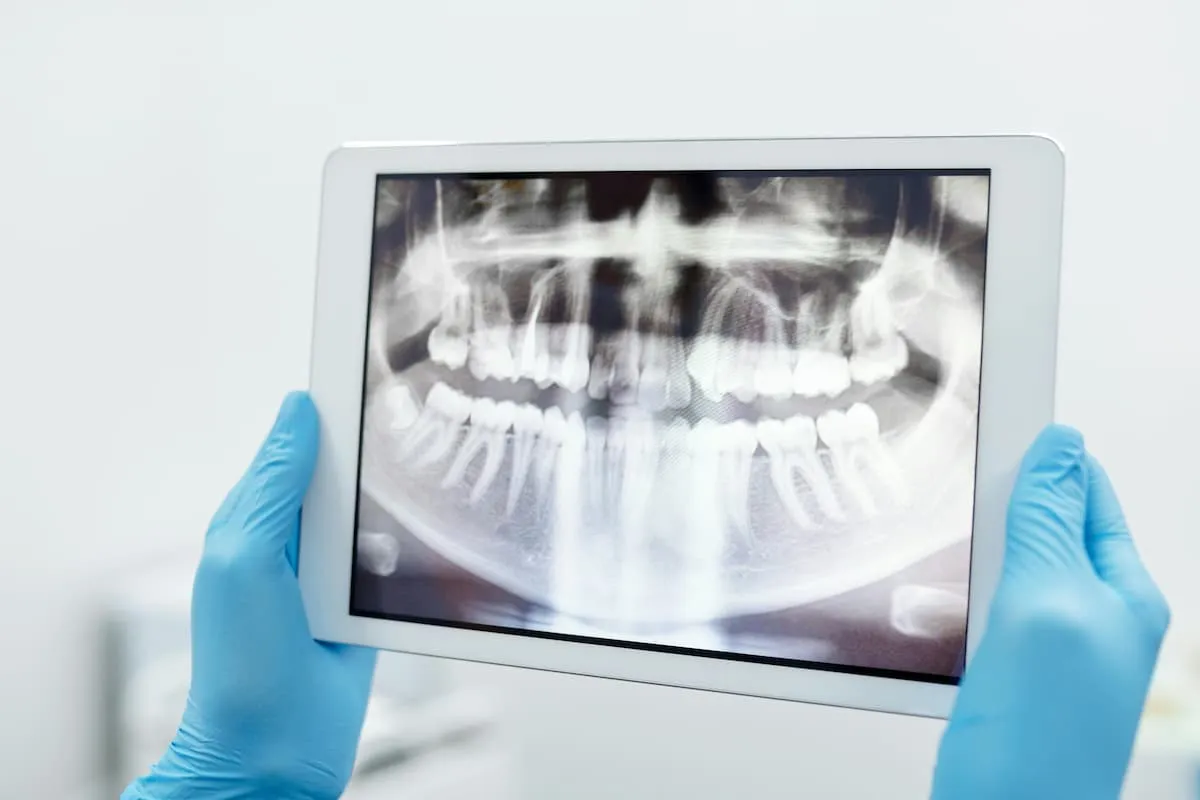
Digital Dentures: Faster, More Comfortable, More Accurate
Getting dentures is exciting in that it gives you a fresh set of teeth, but it used to mean messy impressions, long appointments, and an overall uncomfortable process.
But now, as with other dental procedures, a new way of mould-making is here. Using high-tech imaging systems, you can now have your scans done digitally. With intraoral scans, patients no longer have to endure the goopy impressions that dentists once had to use.
What Is Digital Scanning?
Traditional impressions involve a tray filled with a thick, goopy material pressed into your mouth. You hold still and wait for it to set, all while having to tolerate the discomfort. The resulting mould gets sent to a lab, cast into a model, and used to build your denture.
Digital scanning skips all of that. A small handheld wand moves along your gum line, capturing thousands of data points in real time. The result is a precise 3D map of your mouth, sent directly to the lab as a digital file.
No goopy trays, no physical moulds that can warp in transit, and more importantly, not nearly as much discomfort.
Why It’s More Comfortable
For many people, the impression process is the most dreaded part of getting dentures. It’s a strange moment where the material coats your mouth, starts cold and warms up, and you’re just supposed to sit there and try to relax while it hardens.
Digital scanning takes a few minutes with a lightweight wand. Because you’re not biting into anything or holding a fixed position, even patients with dental anxiety or limited jaw mobility can have a stress-free experience.
There’s less time in the chair, less mess, and you can actually see your scan on a screen in real time.
The Difference in Accuracy
From a clinical standpoint, physical moulds can distort. Temperature affects the material, and handling it introduces small changes. By the time a traditional mould reaches the lab, it’s already slightly off from the exact impression taken in the chair.
Digital scans don’t degrade. The file that leaves the clinic is identical to what the scanner captured. Labs use that data to mill or print the denture with the same precision throughout the entire process.
Patients get a fit that’s closer to perfect on the first try. That means:
- Fewer adjustments after delivery
- Less irritation on sensitive gum tissue
- A more natural bite and feel from day one
Faster Turnaround, Fewer Appointments
Traditional denture timelines can stretch across multiple visits. Impressions, wax try-ons, adjustments, more adjustments. It’s a process.
Digital workflows compress that timeline significantly. Because the lab is working from an accurate file from the start, there’s less back-and-forth. Cases that used to take weeks can move faster, depending on the complexity.
For people replacing damaged or failing teeth, there’s urgency there. Every extra week without a properly fitting denture affects eating, speaking, and confidence.
But is it right for everyone?
Digital scanning works well for most denture cases. Full dentures, partial dentures, and implant-supported dentures: the technology applies to all of them.
Yet, there are edge cases where traditional methods are still used, but they’re becoming less common as digital tools improve. A good denturist will assess what makes sense for your specific situation and walk you through the options.
The Future of Dentures Is Here
Digital dentures aren’t just a tech upgrade for the sake of it. The improvements in comfort, accuracy, and time savings actually make a difference in the patient experience.
If you’ve been putting off getting dentures because of bad impressions or past fitting issues, it’s worth asking about the digital process.
Ready to see what a better fit feels like? Book a consultation with Hillhurst Denture Clinic and find out if digital dentures are right for you.